“Extending Immunization to Long-Unreached and High-Risk Area”
A Story of Change from UC Mulazai, District Tank.
Project Title: Strengthening Community Trust & Access to Zero-Dose Children District Tank, Khyber Pakhtunkhwa
A District of Challenges
District Tank remains one of the most underserved and operationally challenging districts of Khyber Pakhtunkhwa. Fragile law and order conditions, periodic curfews, movement restrictions, and damaged road infrastructure frequently limit access to remote settlements. Routine immunization services have struggled to maintain consistent outreach in several pockets due to security constraints and logistical barriers. Low literacy, limited health awareness, and persistent misconceptions about vaccines have further weakened coverage. As a result, many children in certain villages have missed routine immunization and polio campaigns for extended periods, leaving them vulnerable to vaccine-preventable diseases.
Reaching the Unreached
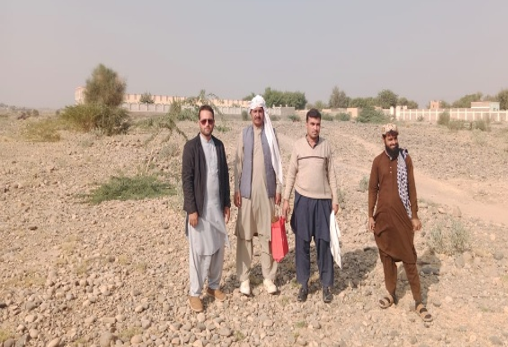
Within this context, the nationwide Measles Rubella (MR) Campaign provided a great opportunity to reach children who had remained unvaccinated for nearly two years. The HEADS team, in close coordination with District EPI staff, worked to identify and access leftover and security sensitive areas that had repeatedly been missed. Travel was slow and risky due to poor road conditions and entry into certain villages required prior consultation with local elders. Caregiver hesitancy and low awareness presented an additional challenge. Rebuilding trust became as important as delivering the vaccines themselves.
Dedicated Teams, Dedicated Effort
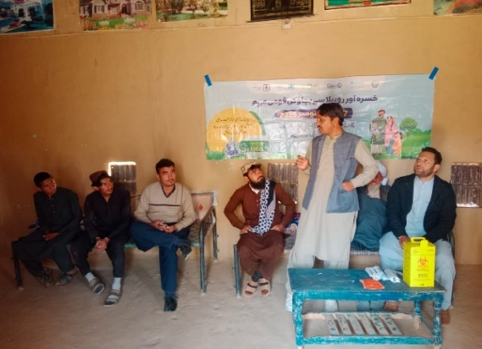
Community Mobilizers Mr. Ashraf and Ms. Nabila Bibi, in close coordination with FSV and District EPI teams, extended outreach beyond the initially assigned villages of Mullazai and Kakakhel to ensure comprehensive coverage. Through door-to-door visits, engagement with local elders and tailored counseling sessions, the team addressed concerns and promoted the importance of routine immunization. A community awareness session in Ashamali Korona further strengthened understanding of MR vaccination and its protective benefits.
Children Who Found Protection
Among the beneficiaries were children like Zain (son of Muhammad Yousaf) and Fatima (daughter of Shabana Bibi), who had missed all previous MR campaigns as well as routine immunization.
- Zain received his first-ever MR dose, while
- Fatima completed her missed OPV doses.
Additionally, the team identified 15 zero-dose children and 5 defaulters for follow-up, ensuring that these children are linked to routine immunization services in the future.
A Community Shift
The intervention in UC Mulazai brought more than just vaccines; it sparked a meaningful change in attitudes and trust. A total of 56 children received the MR vaccine, while 60 were administered OPV. Caregivers began showing renewed confidence and willingness to vaccinate their children and community elders stepped forward to actively support immunization efforts. Beyond the numbers, this initiative encouraged lasting acceptance and strengthened trust in vaccines within a community that had long been hesitant, paving the way for sustainable immunization coverage.
Overall Impact
This experience highlights that even in fragile and high-risk settings, sustained mobilization, coordinated action, and trust-building can restore immunization access. It strengthens:
- Community confidence in vaccines
- Capacity of frontline workers and mobilizers
- Identification and follow-up of zero-dose and defaulter children
- Prospects for equitable coverage for every child
When Persistence Meets Trust
In UC Mulazai, success was measured not just by vaccines delivered, but by trust built. Through dialogue, respect and community engagement, previously hesitant families embraced immunization. What began with gaps and uncertainty evolved into confidence and inclusion turning missed children into protected ones and ensuring more equitable access to immunization for all.