- Donor: Tayaba Organization
- Duration: 1st March 2026 to 20th April 2026
- Working Area: District Tank, KP
- Beneficiaries: 1360 Deserving Beneficiaries in District Tank
- Budget: 1800,000
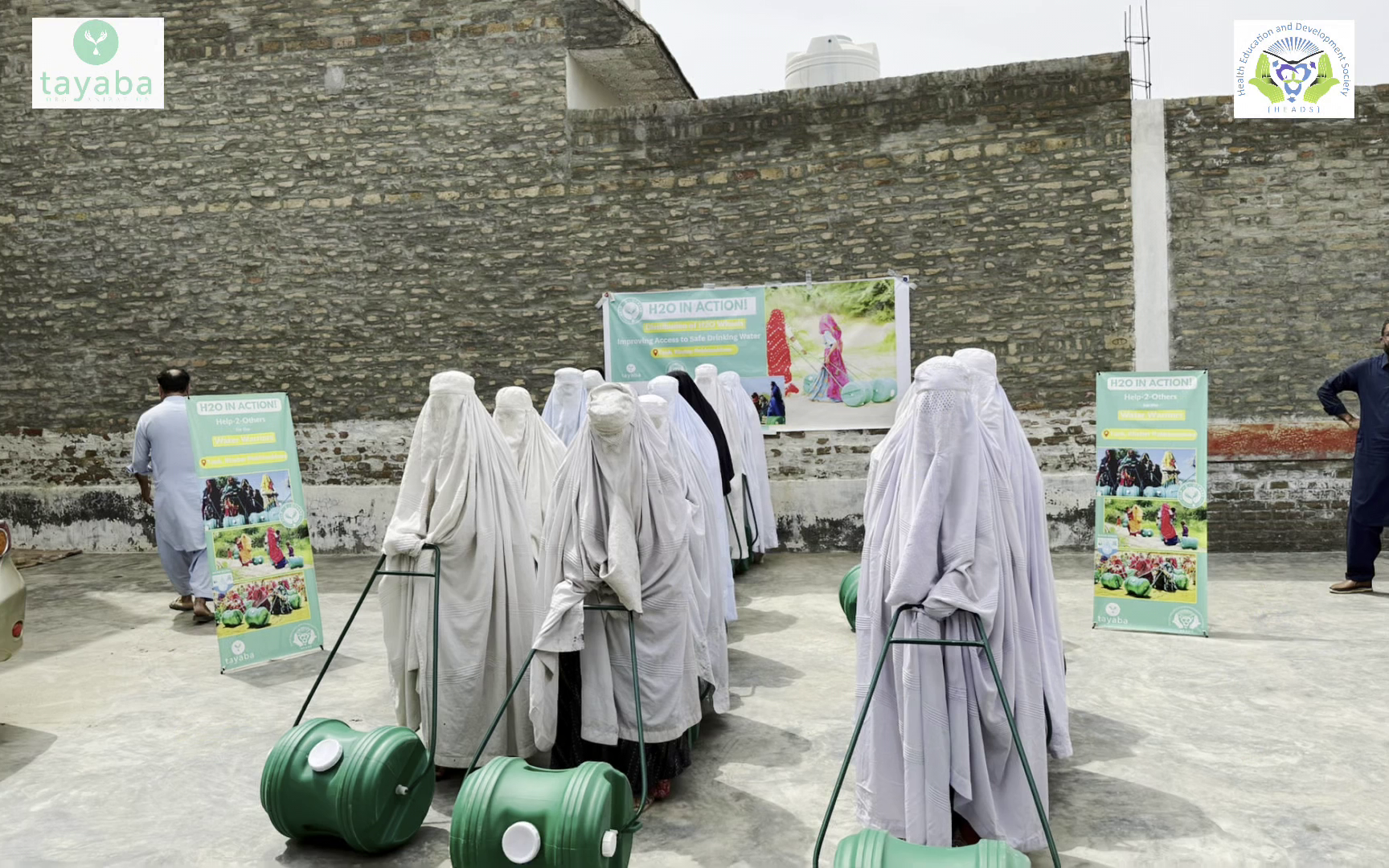
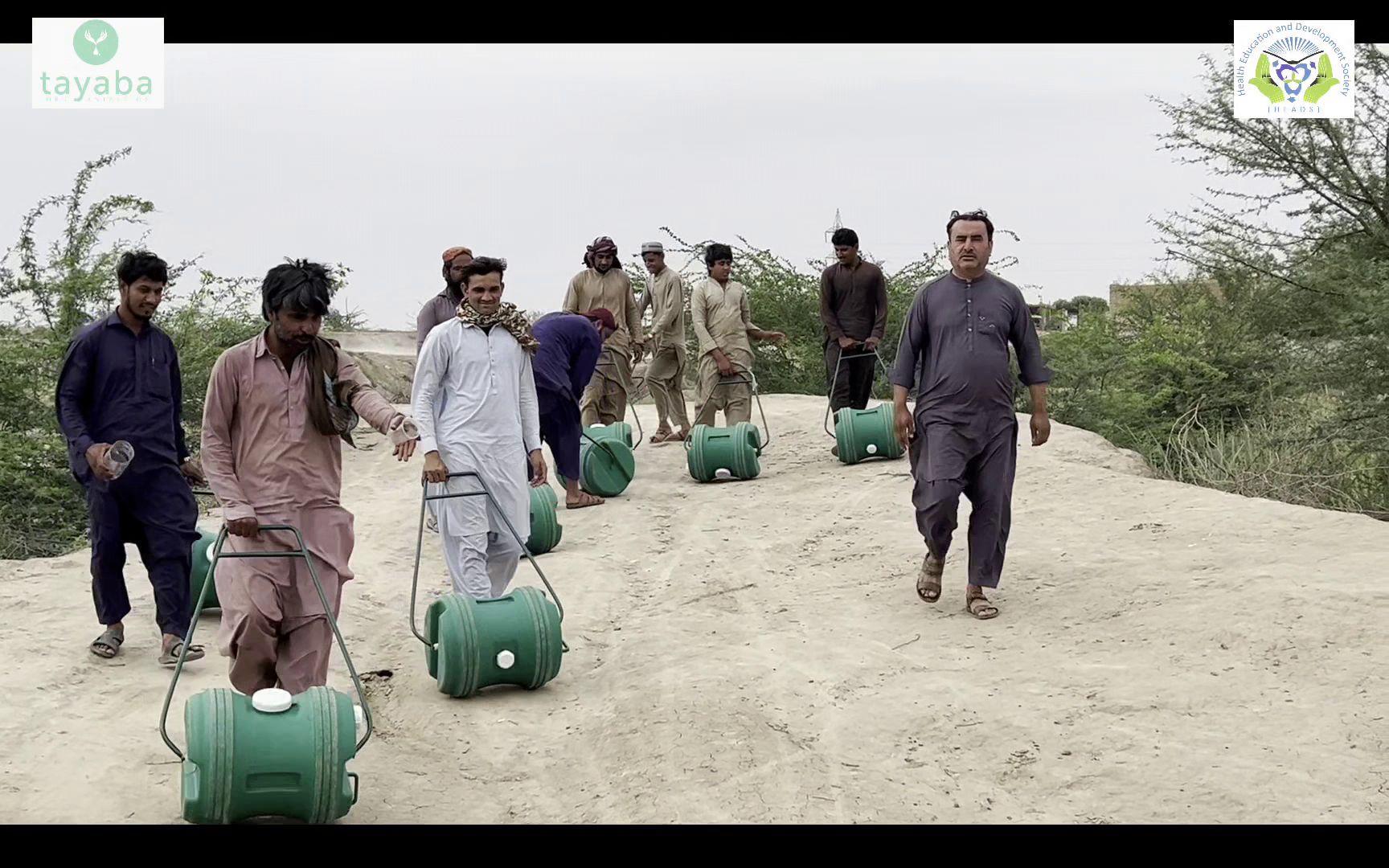
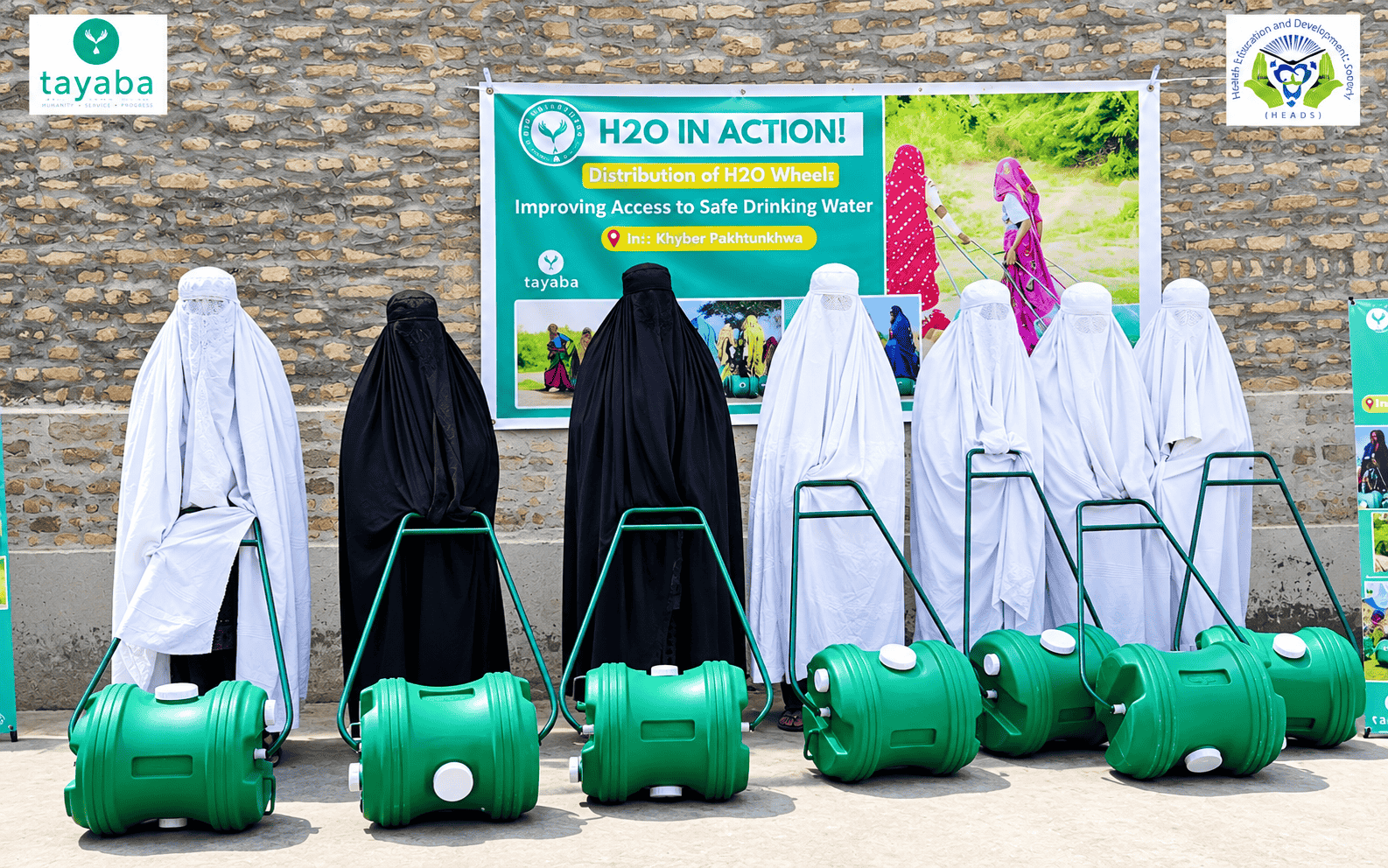
The H2O Water Wheel Distribution Project was designed to improve access to water for vulnerable and underserved households in District Tank and Jandola, Khyber Pakhtunkhwa. The project addressed challenges faced by communities with limited water infrastructure, where women and children often spend considerable time and effort collecting water from distant sources. H2O Water Wheels provided a practical means of transporting water, helping reduce the burden of water collection and improving daily access for vulnerable households.
Key Interventions
- Distribution of 200 H2O Water Wheels to vulnerable and underserved households.
- Coverage of hard-to-reach communities across 15 Union Councils in Tank and Jandola.
- Prioritization of households facing acute water scarcity, limited infrastructure, and prolonged water-collection journeys.
- Priority consideration for female-headed households, elderly persons, persons with disabilities, single-parent families, large households, and other socially vulnerable groups.
- Beneficiary verification through CNIC documentation, household assessments, and field-level verification.
- Gender-sensitive distribution arrangements, including dedicated arrangements for women and men.
- Structured distribution in phases and batches, supported by beneficiary registration, receipt confirmation, field monitoring, and photographic documentation.
Community Engagement & Accountability
Community-level identification and field assessments were used to verify households against established selection criteria. Beneficiary records were cross-checked through CNIC verification and finalized distribution lists, while signatures or thumb impressions confirmed receipt of the water wheels. Field monitoring and photographic documentation supported transparency and accountability throughout the distribution process.
Project Impact
The distribution helped vulnerable households transport water more easily from distant sources, reducing the time and physical effort required for water collection. The intervention particularly supported households where women, children, elderly persons, or other vulnerable members carry a significant share of the water-collection burden, contributing to improved daily living conditions in underserved communities.